
Scratch for Advanced Young Learners L1
Scratch is an engaging programming platform that helps students learn …
What you'll learn
Scratch is an engaging programming platform that helps students learn real coding concepts in a fun and interactive way. In this course, students create more advanced projects like complex games and interactive systems.
They learn important concepts such as variables, loops, conditionals, and events, and how to use them to control characters and build multi-level games. Students also explore problem-solving, logical thinking, and debugging skills.
By the end of the course, students can design complete games with levels, scoring systems, and interactive features, building a strong foundation for future programming languages.
Scratch for Advanced Young Learners L2
Scratch Level 2 takes students to the next level of …
What you'll learn
Scratch Level 2 takes students to the next level of creativity and challenge! In this course, students build more complex and exciting projects such as advanced games with multiple levels, smart interactions, and creative designs.
They deepen their understanding of coding concepts like variables, loops, conditionals, and events, and start combining them in more powerful ways. Students also explore new ideas like game logic, animations, and improving user experience.
This level focuses more on problem-solving, critical thinking, and debugging, helping students think like real programmers.
By the end of the course, students can create more professional and interactive games with advanced features, making this level more challenging, more fun, and even more.
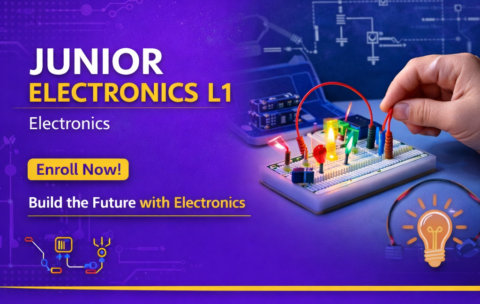
What you'll learn
This course introduces young learners to the exciting world of electronics in a fun, simple, and hands-on way. Children will explore basic electrical concepts such as voltage, current, and polarity, and learn how electricity works in everyday life.
Through interactive activities, students will build real circuits using components like LEDs, resistors, capacitors, transistors, and sensors. They will also learn how to read circuit diagrams, use a breadboard, and safely connect electronic parts.
By the end of the course, students will create their own mini projects—like alarm systems and light-based circuits—helping them develop problem-solving skills, logical thinking, creativity, and confidence.
This course is perfect for building a strong foundation in STEM and inspiring kids to become future innovators and engineers.
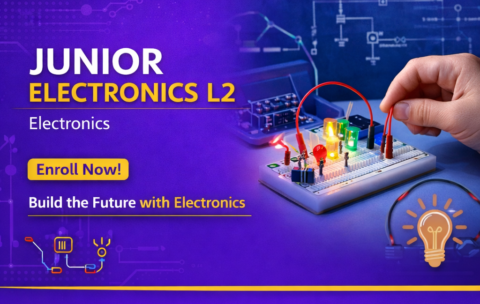
What you'll learn
This advanced level builds on the basics of electronics and takes children deeper into the world of circuits, components, and real-life applications. Students will explore how different electronic elements work together to create smart systems, while using simulation software to design and test their ideas.
Through hands-on experiments and interactive learning, children will understand concepts like AC vs DC, circuit types, sensors, and energy sources such as solar power. They will also discover how devices like music and recording ICs work in real life.
By the end of the course, students will be able to design, simulate, and present their own electronic projects with confidence. This level strengthens problem-solving skills, creativity, and prepares kids for more advanced STEM learning.
- 1
- 2
 English
  العربية