
What you'll learn
Programming & Robotics
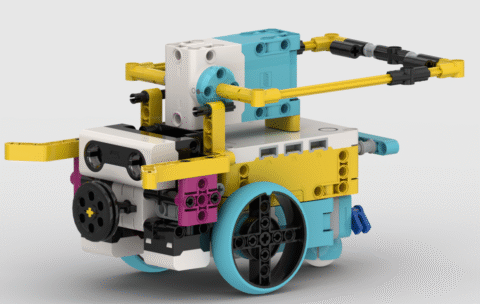
Spike Prime Programming Level 1
Get introduced to Robots; learn robot partsand use Spike software …
What you'll learn
Programming and Robotics
What you'll learn
This course introduces students to the world of mobile app development. Students will learn how to design Mobile apps, add various user interfaces and sensors to the app, and connect and control them using block-based programming.
By the end of this course, students will:
• Understand how mobile apps work and different types of them.
• Understand different types of User interfaces.
• Learn how to program full working mobile apps using block-based programming.
• Learn programming basics like variables, functions, conditions, loops, events, data types, etc.
• Learn about different sensors in their phones and how to get their readings and use them in the app.
• Learn about databases and how to use them in their apps.
• Develop problem-solving and logical thinking skills.
The course consists of 3 levels, where each level is 4 sessions.
What you'll learn
This course introduces students to the world of mobile app development. Students will learn how to design Mobile apps, add various user interfaces and sensors to the app, and connect and control them using block-based programming.
By the end of this course, students will:
• Understand how mobile apps work and different types of them.
• Understand different types of User interfaces.
• Learn how to program full working mobile apps using block-based programming.
• Learn programming basics like variables, functions, conditions, loops, events, data types, etc.
• Learn about different sensors in their phones and how to get their readings and use them in the app.
• Learn about databases and how to use them in their apps.
• Develop problem-solving and logical thinking skills.
The course consists of 3 levels, where each level is 4 sessions.
What you'll learn
This creative course introduces children to the exciting world of game design using 3D environments. Through the easy and visual platform Kodu Game Lab, students learn how to build their own interactive games while developing real programming thinking skills.
Children will design colorful worlds, create characters, and control their behavior using simple visual coding (no typing required). They will explore concepts like sequences, conditions (if/then), scoring systems, and game rules—all in a fun and playful way.
Through hands-on projects, kids improve their creativity, logical thinking, and problem-solving skills. They also gain confidence as they bring their own game ideas to life and share them with others.
By the end of the course, students will be able to design and present their own 3D games, making this a perfect first step into programming, game development, and the world of technology
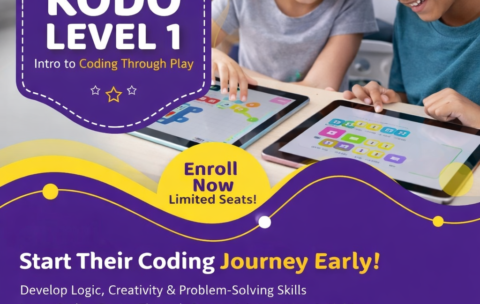
Kodu Game Lab Course L1
This creative course introduces children to the exciting world of …
What you'll learn
This creative course introduces children to the exciting world of game design using 3D environments. Through the easy and visual platform Kodu Game Lab, students learn how to build their own interactive games while developing real programming thinking skills.
Children will design colorful worlds, create characters, and control their behavior using simple visual coding (no typing required). They will explore concepts like sequences, conditions (if/then), scoring systems, and game rules—all in a fun and playful way.
Through hands-on projects, kids improve their creativity, logical thinking, and problem-solving skills. They also gain confidence as they bring their own game ideas to life and share them with others.
By the end of the course, students will be able to design and present their own 3D games, making this a perfect first step into programming, game development, and the world of technology
What you'll learn
Expand your computer programming skills and get ready to earn a certification.
Overview
Endless possibilities await when you acquire in-demand programming skills. Python is a multi-paradigm programming language used by startups and tech giants like Google, Facebook, Netflix, and more. With intuitive, readable syntax, Python is a great first programming language to learn. Having Python skills qualifies you for careers in almost any industry and is required for advanced and higher paying software development and engineering roles.
This course is the second in the two-course Python Essentials series and is designed for learners already familiar with the basics of Python. Dive into advanced Python concepts, learn Object-Oriented Programming (OOP), and develop your own programming portfolio. This course prepares you for thePCAP – Certified Associate in Python Programming certification (Exam PCAP-31-0x).
Developed in collaboration with OpenEDG Python Institute.
What you'll learn
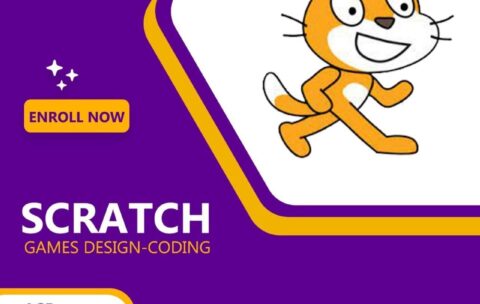
Scratch projects are made up of objects called sprites. Each sprite can have different costumes to change how it looks. A sprite can be a character, an animal, a vehicle, or anything you imagine. You can create your own costumes using the Paint Editor, upload images from your computer, or choose from the Scratch library.
In Scratch, you can also add backgrounds (called backdrops) to set the scene for your project, like a city, space, or underwater world.
You control sprites by giving them instructions. These instructions are created by snapping together colorful coding blocks to form scripts. With these blocks, you can make sprites move, talk, play sounds, respond to keyboard input, and interact with other sprites.
Scratch also lets you use simple concepts like loops, events, and conditions to make your projects more interactive and dynamic. When you click the green flag, all your scripts start running from top to bottom, bringing your project to life.
 English
  العربية